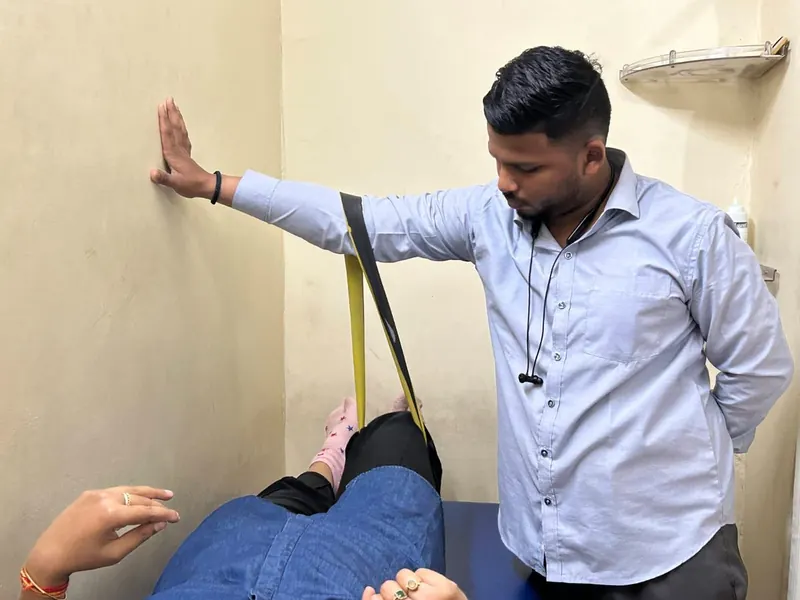
ACL Injury: What You Need to Know
An ACL (anterior cruciate ligament) injury is one of the most significant sporting injuries, commonly occurring in football, cricket, basketball, kabaddi, and gym training. At VPARC in Varanasi, Dr. Prashant Punj has managed ACL rehabilitation for athletes from schoolchildren to state-level players.
ACL Rehabilitation Phases at VPARC
- Pre-operative Phase — Prehab before surgery: reducing swelling, maintaining quad strength
- Phase 1 (0–6 weeks post-op) — Swelling control, full knee extension, quad activation
- Phase 2 (6–12 weeks) — Progressive strengthening, proprioception, cycling
- Phase 3 (3–5 months) — Running progression, agility, neuromuscular control
- Phase 4 (5–9 months) — Sport-specific drills, cutting movements, full training integration
- Return-to-Sport Criteria — Objective strength testing (LSI ≥90%), hop tests before clearance
Conservative ACL Management
Not all ACL injuries require surgery. Isolated ACL tears in older patients, or partial tears in athletes who perform linear sports, may be managed successfully with intensive physiotherapy alone.
Why Timelines Matter in ACL Rehab
The most common cause of ACL re-rupture is returning to sport too early. At VPARC, clearance is based on objective criteria — not just time elapsed. This evidence-based approach produces significantly lower re-injury rates.
Returning to Sport After an ACL Injury
Time alone does not decide when you can go back. Safe return depends on knee strength, hop and movement tests, control during cutting and landing, and your confidence. Many protocols advise waiting until around nine months or longer before returning to pivoting and jumping sports, because going back earlier is linked with a higher chance of re-injury. Your surgeon’s advice always comes first.
Common Problems During ACL Recovery
- Difficulty fully straightening the knee
- Swelling that lingers or returns after activity
- Thigh (quadriceps) weakness that is slow to recover
- Pain at the front of the knee or at the graft site
- Fear of re-injury, which can hold back progress
These are easier to manage when caught early, so tell us as soon as you notice them.
Questions to Ask Your Surgeon Before Rehabilitation Starts
- Which graft was used, and was the meniscus repaired? This affects weight-bearing and bending limits.
- Do you need a brace, and for how long?
- When should physiotherapy begin, and are there movements to avoid?
- When is the next review, and what progress do you expect by then?