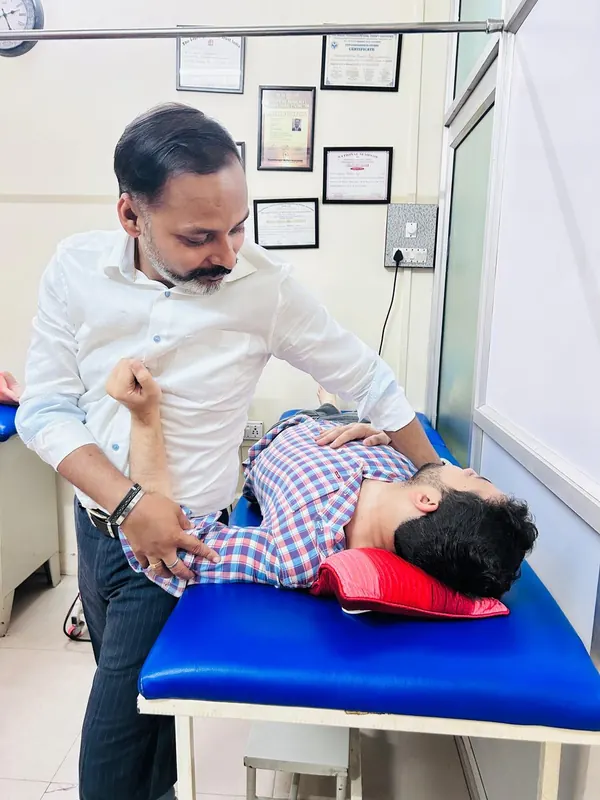
Frozen Shoulder: Why It Happens and Why It Hurts So Much
Frozen shoulder (adhesive capsulitis) is a condition where the shoulder joint capsule becomes inflamed, scarred, and contracted — severely restricting movement and causing constant pain, especially at night. It affects 2–5% of the population, is more common in diabetics and those over 40, and can last 12–36 months without treatment.
At VPARC in Varanasi, Dr. Prashant Punj has treated hundreds of frozen shoulder patients. With intensive manual therapy and progressive mobilisation, VPARC's programme dramatically reduces recovery time.
The Three Phases of Frozen Shoulder
- Freezing Phase (2–9 months) — Progressive pain and stiffness; treatment focuses on pain control
- Frozen Phase (4–12 months) — Stiffness dominant; intensive mobilisation is most effective here
- Thawing Phase (5–26 months) — Spontaneous improvement; physiotherapy accelerates this significantly
VPARC's Frozen Shoulder Protocol
- Grade III and IV joint mobilisation to stretch the contracted capsule
- PNF stretching and Maitland techniques
- Heat therapy prior to mobilisation
- Home stretching programme to maintain gains between sessions
- Hydro-dilatation coordination (injection + immediate physio) for severe cases
Results at VPARC
Frozen shoulder can take many months to settle on its own, often one to three years. Treatment matched to the stage aims to ease pain and restore movement sooner. Recovery time varies from person to person and depends on the stage at which treatment starts.
Who Is More Likely to Get Frozen Shoulder?
- People aged about 40 to 60
- People with diabetes, in whom it is more common and can be more stubborn
- People with thyroid problems
- After a shoulder injury, surgery, or a period of keeping the arm still
- People who have had frozen shoulder in the other arm
How It Differs From Other Shoulder Problems
In frozen shoulder, both your own movement and movement helped by someone else are limited, especially turning the arm outward and lifting it overhead. In a rotator cuff problem, the arm is often weak or painful when lifted, but it can usually be moved further by someone else. An examination is needed to tell them apart, and the treatment differs, so it is worth getting checked before starting exercises.
Home Care Between Sessions
- Apply warmth to the shoulder before stretching if it feels comfortable
- Stretch only to a point of firm tension or mild discomfort, never sharp pain
- Keep using the arm for light daily tasks instead of guarding it
- Support the arm with a pillow when sleeping on the other side
- Stay consistent: short, frequent exercise sessions work better than occasional long ones