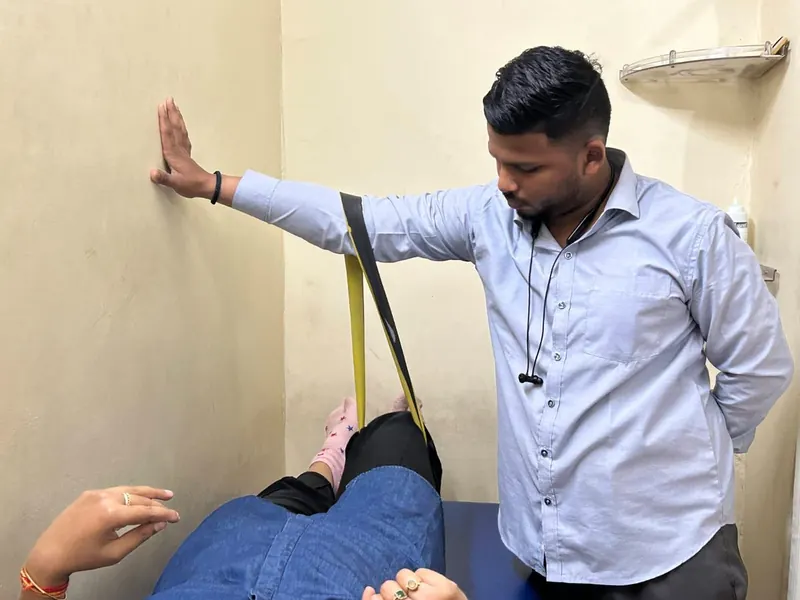
Sports Physiotherapy: Beyond Basic Treatment
Sports physiotherapy requires a deeper understanding of biomechanics, training loads, and sport-specific demands. At VPARC in Varanasi, Dr. Prashant Punj applies evidence-based sports rehabilitation for athletes from school level to state competition — treating injuries thoroughly and restoring performance completely.
Sports injuries treated at VPARC: muscle strains and tears, ligament sprains, ACL and PCL injuries, meniscal tears, rotator cuff injuries, tennis elbow, golfer's elbow, shin splints, stress fractures, IT band syndrome, and overuse injuries.
Sports Served at VPARC
Cricket, football, kabaddi, volleyball, basketball, badminton, wrestling, athletics, swimming, weightlifting, martial arts, gym training injuries, and recreational fitness injuries.
VPARC's Sports Rehabilitation Approach
- Accurate Diagnosis — Clinical examination + imaging review
- Acute Management — Reducing pain and swelling while maintaining fitness
- Rehabilitation — Targeted strength, flexibility, proprioception training
- Sport-Specific Training — Drills mimicking your sport's demands
- Return-to-Sport Testing — Objective assessments to confirm readiness
- Injury Prevention — Biomechanical screening and corrective exercise
Motion Analysis for Athletes
VPARC is equipped with the Dr. Punj Motion Analysis System (DPMAS) — analysing running, throwing, and movement mechanics to identify hidden risk factors and guide technique correction.
Common Sports Injuries We Treat
- Ankle sprains and recurring ankle instability
- Hamstring, quadriceps and groin strains
- Shin splints and stress-related leg pain
- Runner’s knee and patellar tendon pain
- Shoulder pain in cricket, badminton, swimming and gym training
- Tennis elbow and golfer’s elbow (see tennis elbow treatment)
- Achilles tendon pain and heel pain (see heel pain treatment)
- Ligament injuries, including ACL (see ACL rehabilitation)
Stages of Sports Injury Recovery
- Protect and settle — control pain and swelling and avoid aggravating the injury
- Restore movement — regain range of motion with gentle, guided exercise
- Rebuild strength and control — progressive loading, balance and coordination
- Return to sport — sport-specific drills, then training, then match play when you meet agreed criteria
Preventing the Next Injury
Many sports injuries come from a sudden jump in training load, poor movement patterns, weak stabilising muscles or too little recovery. We can screen your movement, point out weak links, suggest a sensible build-up of training, and teach warm-up and strengthening routines for your sport.