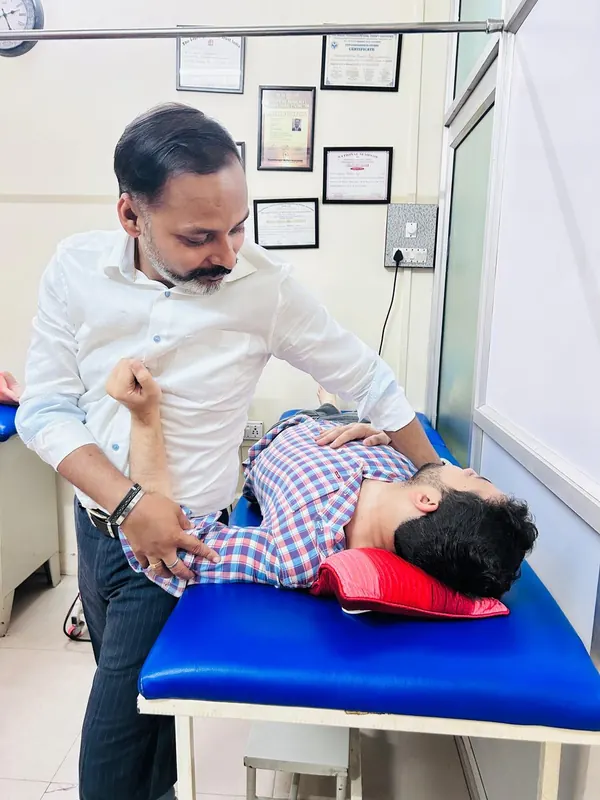
What Is Post-Operative Shoulder Rehabilitation?
The shoulder is the most mobile joint in the body, which is exactly why post-surgical rehabilitation has to be precise — too little motion work and the joint stiffens, too much load too soon and a repair can fail. VPARC builds your rehabilitation programme around the exact surgery performed and your surgeon's tissue-healing timeline.
Shoulder Surgeries We Rehabilitate
Rotator Cuff Repair — a staged protocol moving from protected passive motion, to active-assisted motion, to active strengthening, timed to tendon-to-bone healing.
Recurrent Dislocation Surgery (Bankart Repair / Latarjet Procedure) — early motion within safe ranges, avoiding positions that stress the repaired labrum or bone block, progressing to full strength and stability training for return to sport or overhead work.
Total Shoulder Replacement & Reverse Shoulder Arthroplasty — protected passive motion progressing to active use, with rehabilitation goals tailored to the implant type.
Labrum Repair (SLAP Repair) — protected overhead motion in early phases, building toward full overhead strength and control.
Frozen Shoulder Capsular Release — aggressive early motion work to prevent the joint re-stiffening after release.
Clavicle and Proximal Humerus Fracture Fixation — motion and strengthening progressed according to fracture healing on imaging.
AC Joint Reconstruction — protected positioning in early weeks, followed by graded strengthening.
How Rehabilitation Is Phased
- Protection phase — sling use, pain control, protected passive range of motion within surgeon-set limits
- Active motion phase — active-assisted then active range of motion, scapular control work
- Strengthening phase — rotator cuff and scapular strengthening, progressive resistance
- Return-to-activity phase — sport- or work-specific loading, overhead control, functional testing before clearance
Why Precision Matters More in the Shoulder
Rushing shoulder rehabilitation risks re-tear or re-dislocation; being too conservative risks permanent stiffness that no amount of later therapy fully reverses. Both failure modes are common when rehabilitation isn't matched precisely to the surgery performed — which is why the protocol is set jointly with your operating surgeon, not applied generically.
Who Should Book This Programme
Anyone scheduled for or recovering from rotator cuff repair, dislocation stabilisation surgery, shoulder replacement, labrum repair, or a related shoulder procedure — particularly athletes and overhead workers needing a safe, monitored return to full function.