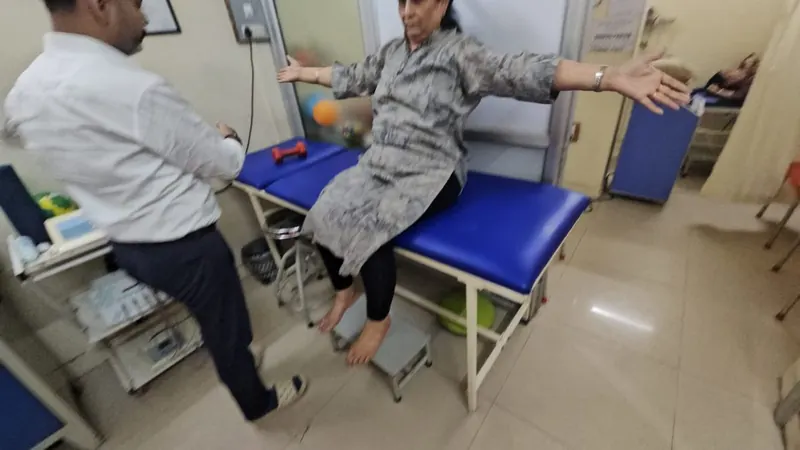
Neurological Physiotherapy at VPARC Varanasi
Neurological physiotherapy addresses conditions affecting the brain, spinal cord, and peripheral nervous system. At VPARC in Varanasi, Dr. Prashant Punj provides specialist rehabilitation for patients who have had a stroke, are living with Parkinson's disease, cerebral palsy, multiple sclerosis, Guillain-Barre syndrome, spinal cord injury, traumatic brain injury, or peripheral neuropathy.
Neurological rehabilitation requires a fundamentally different approach from musculoskeletal physiotherapy. The focus is on neuroplasticity - the brain's ability to rewire and regain function through repetitive, task-specific practice. Dr. Punj applies evidence-based neurological rehabilitation techniques that produce measurable functional gains even years after initial injury.
Conditions Treated at VPARC
Stroke rehabilitation covers recovery of arm and leg function, balance, walking, and independence in daily activities. Both early acute-phase and chronic long-term stroke rehabilitation are undertaken at VPARC.
Parkinson's disease management includes gait retraining, balance training, fall prevention, freezing of gait management, and LSVT BIG technique principles. Parkinson's patients benefit significantly from structured physiotherapy to maintain mobility and independence as long as possible.
Cerebral palsy rehabilitation improves mobility, muscle tone management, functional strength, and movement quality in children and adults. Spinal cord injury rehabilitation and peripheral neuropathy management including diabetic neuropathy with balance and strength deficits are also core areas of VPARC's neuro service.
Home Neurological Physiotherapy in Varanasi
VPARC provides neurological physiotherapy at home across Varanasi - essential for many neuro patients who have significant mobility limitations and cannot travel to the clinic. Sessions at home are just as structured and intensive as clinic sessions.
Family members and carers are trained in assisted exercise techniques, positioning, and handling so that rehabilitation continues between clinic visits. This family training component is one of the most valuable aspects of VPARC's neurological rehabilitation approach.
What Recovery After a Neurological Injury Can Look Like
The nervous system can adapt through repeated, task-focused practice. Starting physiotherapy once you are medically stable, and practising regularly, gives the best chance of regaining movement and independence. The amount of recovery differs from person to person and depends on the cause, the severity and how early therapy begins.
Goals We Set With You and Your Family
- Sitting, standing and walking more safely
- Using the affected arm and hand in daily tasks
- Better balance and fewer falls
- Preventing stiff joints, shortened muscles and pressure sores
- Greater independence in dressing, bathing and moving around the home
Supporting Caregivers
Family members are taught safe ways to help with transfers and walking, how to position the person in bed and chair, and which exercises to repeat between visits. Good home practice makes a large difference.
Stroke Warning Signs: Call for Emergency Help
Sudden face drooping, arm or leg weakness, difficulty speaking, sudden confusion, loss of vision or a very severe headache can signal a new stroke. Go to a hospital immediately.