What is plantar fasciitis?
The plantar fascia is a thick band of tissue running along the sole of the foot from the heel to the toes. When it is overloaded, it becomes painful, usually at the inner part of the heel. The classic pattern is sharp pain with the first steps after waking or after sitting for a while, which eases as you walk and may return after long periods on your feet.
Common causes and risk factors
- A sudden increase in walking, standing or running
- Long hours standing on hard floors
- Tight calf muscles or a stiff Achilles tendon
- Flat feet or very high arches
- Worn-out or unsupportive footwear, including thin flat chappals
- Extra body weight, which increases load through the foot
Other causes of heel pain
Not every heel pain is plantar fasciitis. Achilles tendon problems, a bruised heel pad, nerve irritation, and rarely a stress fracture can feel similar. A heel spur seen on X-ray is common and is not always the source of pain, so treatment is guided by examination, not by the X-ray alone.
How VPARC assesses heel pain
Dr. Prashant Punj looks at where exactly it hurts, your daily routine and footwear, ankle and calf flexibility, foot posture and how you walk (see gait analysis). The aim is to find out why the foot is overloaded, not only to calm the pain.
Treatment
- Load management — adjusting walking, standing and exercise so the foot can settle without stopping all activity
- Stretching and strengthening — calf and plantar fascia stretches, then progressive calf and foot strengthening
- Hands-on therapy — soft tissue work and joint mobilisation for the foot and ankle
- Taping and footwear advice — short-term support and guidance on shoes or insoles if your assessment suggests they will help
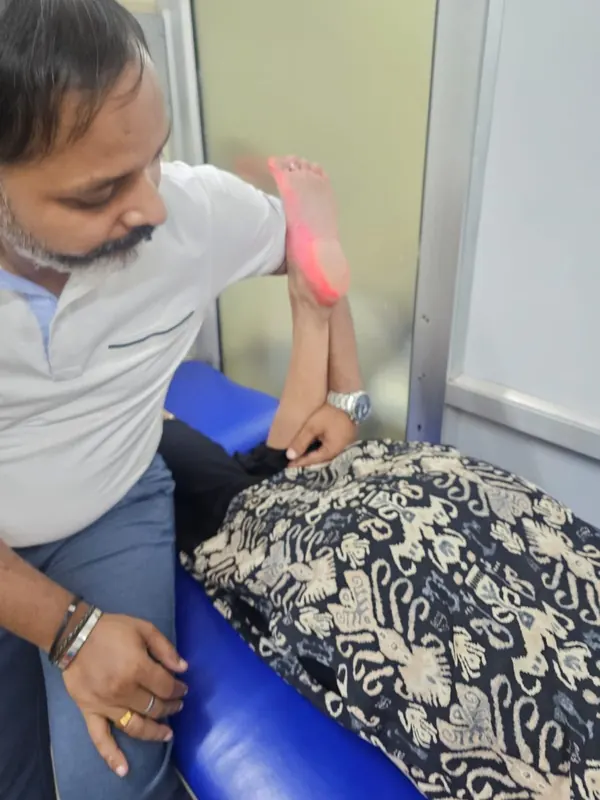
- Laser and electrotherapy — as an add-on for pain relief where suitable
Plantar fasciitis can be slow to settle, often weeks to months, so patience and steady home exercise matter. Your plan will be adjusted as you improve.
What you can do at home
- Avoid walking barefoot on hard floors, especially first thing in the morning
- Wear supportive footwear with a cushioned heel
- Stretch the calf and the sole gently before getting out of bed
- Build walking and exercise back up gradually rather than all at once
- Roll the sole of the foot over a bottle or ball for gentle relief if it feels comfortable
When to see a doctor
- Sudden severe heel pain after an injury, or you cannot put weight on the foot
- Redness, heat, swelling or fever around the heel
- Numbness or tingling in the foot
- Pain that is present at rest or at night regardless of activity
- Heel pain if you have diabetes or poor circulation in the feet
- No improvement after several weeks of sensible self-care