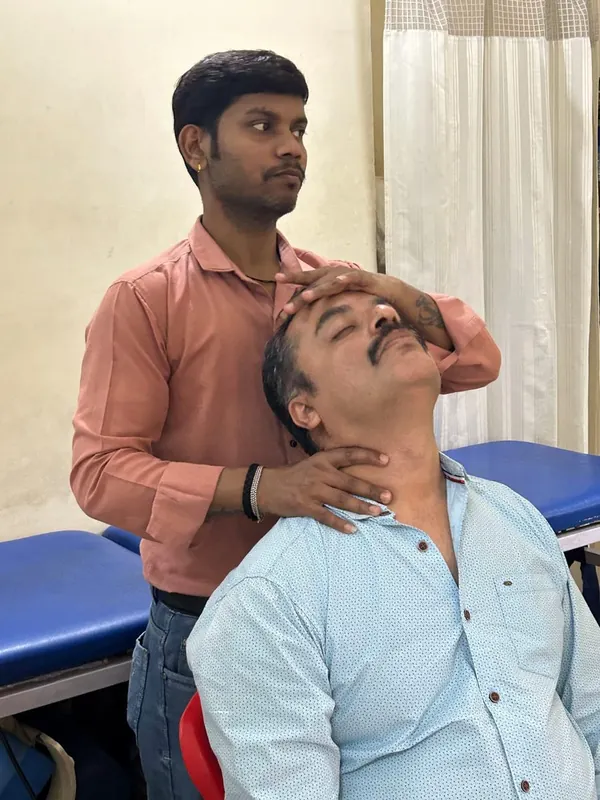
Why neck pain is so common
The neck carries the weight of the head all day, and modern life asks it to hold awkward positions for hours: bending over a phone, leaning toward a laptop, driving in traffic, or sleeping with the head propped too high. Over time the muscles tire, the joints stiffen and the nerves can become irritated. Most neck pain is mechanical, which means it responds well to the right movement, posture changes and hands-on treatment.
Types of neck pain we see
- Postural or muscular neck pain — an ache across the neck and shoulders that builds up through the day
- Stiff neck on waking — sudden pain and difficulty turning the head, often after sleeping awkwardly
- Cervical spondylosis — age-related wear of the neck joints and discs (see our cervical spondylosis page)
- Nerve-root irritation — pain, tingling or numbness spreading into the shoulder, arm or hand
- Whiplash — neck pain after a road accident or sudden jolt
- Neck-related headaches — pain starting at the base of the skull and moving toward the forehead
How VPARC assesses your neck
Your first visit starts with a conversation about when the pain began, what makes it better or worse, your work and sleep habits, and any scans you already have. Dr. Prashant Punj then examines your posture, neck and shoulder movement, muscle strength and nerve function. You are told what is likely causing the pain and what the plan is. If something in the assessment suggests you should see a doctor first, you will be told that clearly.
Treatment at VPARC
- Manual therapy — gentle mobilisation of stiff neck joints and release of tight muscles
- Exercise — deep neck flexor and shoulder blade strengthening so the neck is better supported
- Posture and workstation advice — screen height, chair, phone habits and sleeping position (see ergonomic assessment)
- Dry needling — for stubborn trigger points in the neck and upper back, where suitable
- Traction — in selected cases of nerve-related pain
- Electrotherapy and laser — as an add-on for comfort, not as the only treatment
What you can do at home
- Keep the neck moving gently; long periods of rest tend to make stiffness worse
- Raise your screen to eye level and take a short movement break every 30 to 40 minutes
- Avoid cradling the phone between ear and shoulder
- Use a pillow that keeps the neck in line with the spine rather than tilted up or down
- Do not wear a cervical collar for everyday neck pain unless a doctor or physiotherapist has advised it
For practical tips, read our guide Neck and Shoulder Pain from Phone and Desk Work.
When neck pain needs a doctor first
See a doctor promptly, rather than starting physiotherapy, if neck pain comes with any of the following:
- Pain after a fall, accident or blow to the head or neck
- Weakness or clumsiness in the arms or hands, or trouble walking
- Loss of control of bladder or bowel
- Fever with severe neck stiffness, or a sudden severe headache
- Pain with chest tightness or breathlessness
- Pain at night that is unrelated to movement, or unexplained weight loss